Ring Holders
Comparing Ring Holders: Foam, Velvet, Acrylic and Opal Options
A ring holder has one job: keep a ring upright, visible and easy to pick up. Everything else — how it ages, how it feels, how often you have to clean it — comes down to what it is made from. Foam, velvet, acrylic and opal-effect finishes behave very differently on a shop counter, a dressing table or in a travel case. This comparison sets out the trade-offs in plain terms, so you can choose for your rings rather than for a product photo.
What a Ring Holder Actually Has to Do
Before comparing materials, it helps to name the requirements. A good holder keeps rings upright without pressing on the band, stops them sliding into each other when the tray is moved, and lets one ring be lifted out without disturbing the rest.
Base weight matters more than most people expect. A tall, light stand tips the moment someone reaches for the front row. Slot width matters just as much: narrow slots suit stacking bands, while signet and chunky rings need genuine room. Judge every holder on those three points first, then look at the finish.
Foam Ring Holders: Light, Cheap and Forgiving
Foam is the workhorse of jewellery storage. Cut from polyurethane or EVA, it is light, inexpensive and easy to shape into slots, wedges and trenches that grip a band gently. In retail, foam trays hold dozens of rings and stack neatly inside a safe. Flocked foam — foam with a fine fabric surface bonded to it — is the better-looking cousin, and feels closer to velvet than to sponge.
The weaknesses are ageing and dust. Lower-grade foam can crumble, discolour or lose its spring after a few years of daily handling, and open-cell foam traps dust and skin oils in the cuts. Cleaning should stay light: brush the surface or vacuum it with a soft attachment, wipe with a barely damp cloth, and never soak it. If a foam tray sits on a counter that customers handle all day, treat it as a consumable and expect to replace it.
Velvet Ring Holders: The Traditional Display Surface
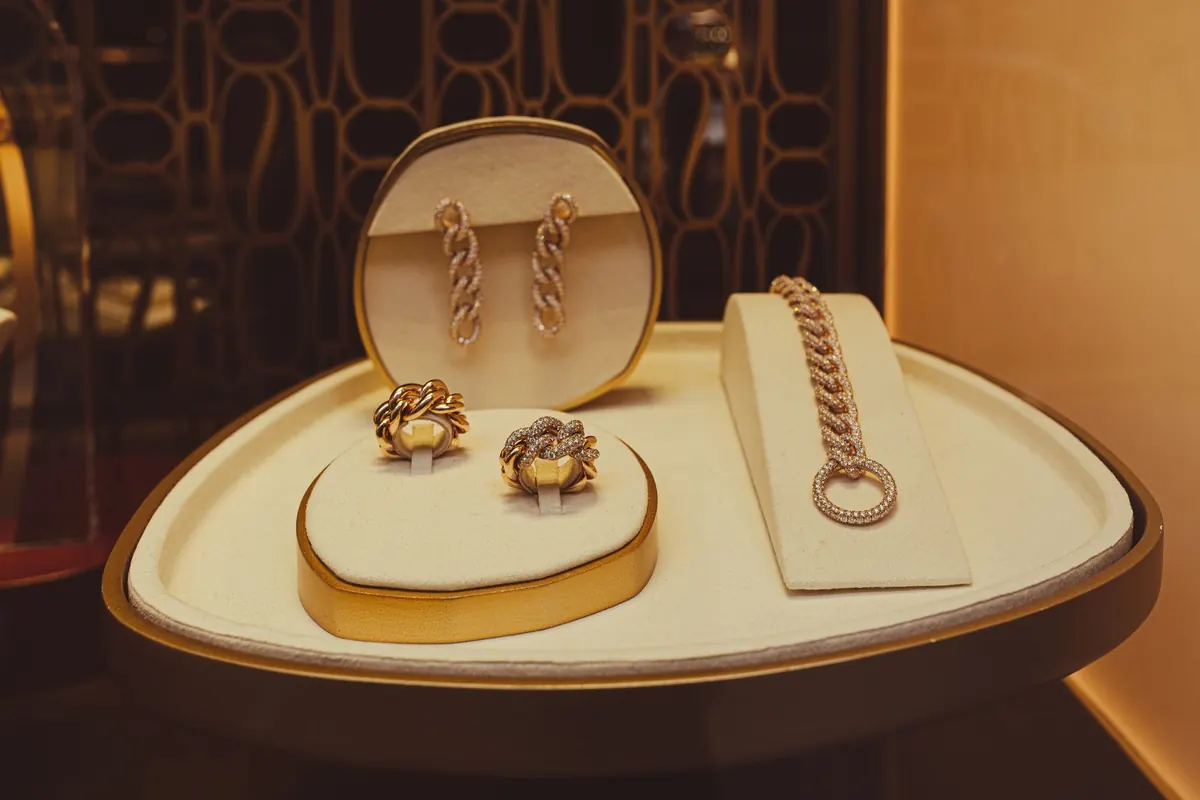
Velvet — and its close relatives velour and velveteen, usually bonded over board or foam — is what most people picture when they think of a ring display. The pile absorbs light instead of bouncing it back, so metal and stones read clearly while the holder stays quiet in the background. Rings settle into the slots with a little resistance, which feels secure and photographs well. Deep colours such as navy, charcoal and burgundy hide the scuffs that show on paler surfaces.
The trade-offs are maintenance and moisture. Velvet attracts lint, holds fingerprints from handling, and can flatten where the same ring is placed again and again. It dislikes damp and direct sun, both of which dull the colour over time. Keep it tidy with a soft brush or lint roller, vacuum gently with a brush attachment, and spot clean sparingly — soaking a velvet holder usually does more harm than good.
Acrylic Ring Holders: Clear, Modern, Wipe-Clean
Acrylic suits a clean, contemporary look. A clear stand makes rings appear to float, which is why acrylic cones and risers turn up constantly in product photography and in modern boutiques. It does not shed fibres, does not absorb oils, and wipes clean in seconds with a damp cloth and a drop of mild soap.
What it will not do is hide anything. Fingerprints, dust and fine scratches all show, particularly on polished edges, and a scratch cannot simply be wiped away. Acrylic also attracts static, so it gathers dust where a fabric surface would hold it less visibly. Cleaning products matter: alcohol, ammonia and acetone-based sprays can cloud or crack it, so stick to mild soapy water and a microfibre cloth. Long exposure to strong sunlight can yellow it over time. Acrylic is unforgiving of neglect, but it rewards attention with the sharpest look of the four.
Opal and Opal-Effect Holders: Colour With Depth
Opal-finish holders do something the other three cannot: they change as you move. An opalescent surface throws different colours depending on the angle and the light, which gives a small display a real sense of depth and makes a single ring feel like the point of the arrangement.
Most holders sold with an opal finish use opalescent resin or glass rather than gemstone opal, which is far too valuable and too fragile for everyday display furniture. Resin versions are the tougher of the two — lighter, less likely to chip, and available in a wide range of colours. Glass versions are heavier, which steadies a base, but can chip at the rim if knocked. Resin can scratch, and after years in a sunny window it may yellow slightly.
That distinction matters when you clean. Resin and glass are happy with a damp cloth and mild soap. If your holder genuinely contains gemstone opal — an inlay, a cabochon, a decorative stone — treat it as you would opal jewellery: keep it away from heat, avoid harsh chemicals and ultrasonic cleaners, and ask a jeweller before cleaning anything valuable.
Comparing the Four Side by Side
Here is the short version, material by material.
- Foam — light, inexpensive and forgiving on bands. Ideal for trays, drawers, travel inserts and high-volume display. Ages faster than the rest and traps dust in the cuts.
- Velvet — the most traditional and the easiest to photograph. Ideal for counters, dressing tables and gift boxes. Needs regular dusting, dislikes damp, and shows handling marks.
- Acrylic — see-through, wipe-clean and modern. Ideal for photography, risers and contemporary interiors. Shows fingerprints, dust and scratches immediately.
Photo: Vaivography / Pixabay
Related Articles